
Why Conflict Feels So Personal (Even When It’s Not)
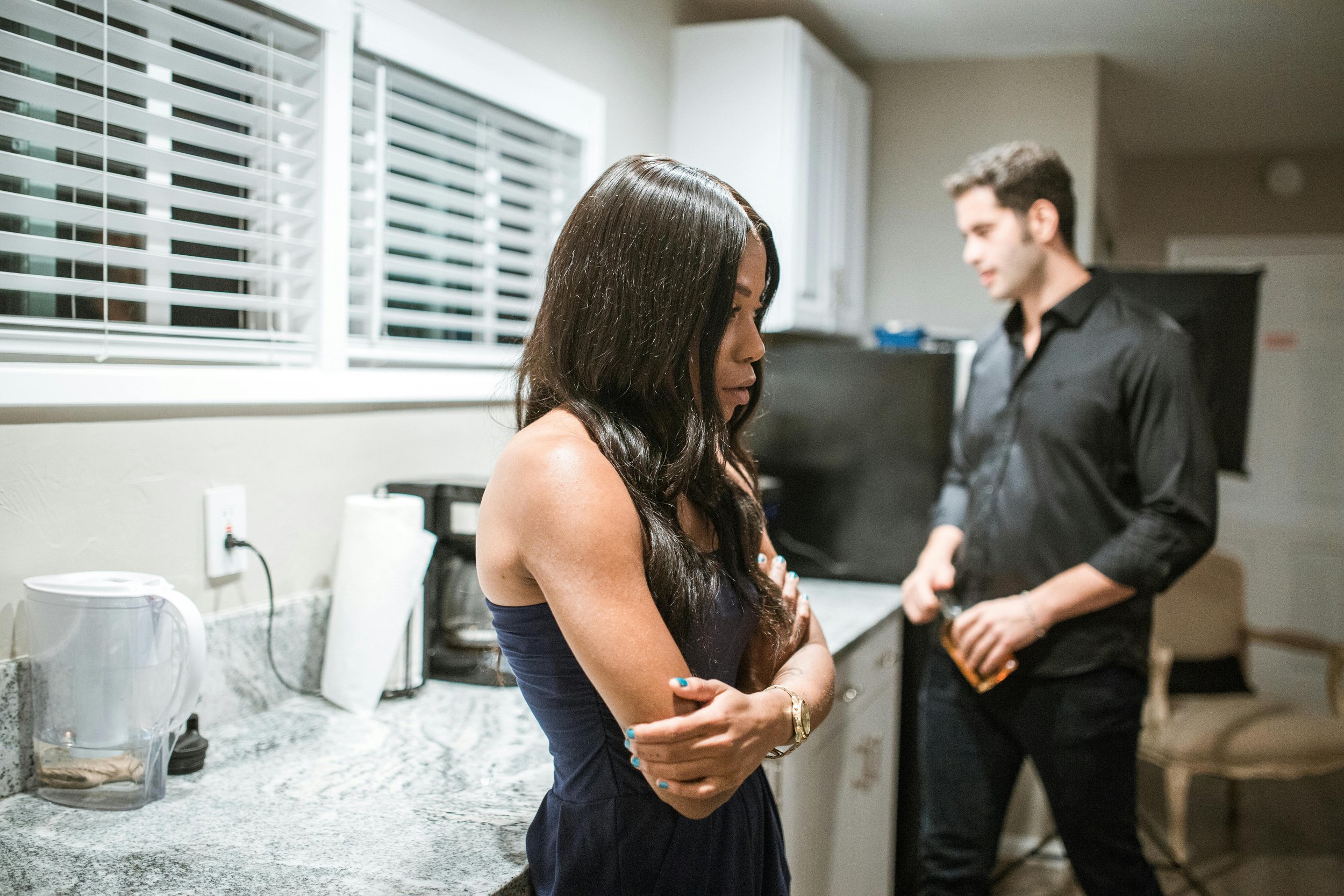
It started with the dishes on the counter and went downhill fast from there…
There were mountains of dishes and I was too tired to put them away before bed that night, so I stacked them in the sink and left them for the morning. The next day as we flung ourselves out of bed after realizing in a sleepy haze that we had overslept (seriously, whose idea was the 9-minute Snooze option on my iPhone?), I was trying to set a record for the fastest work bag ever reorganized on the way out the door when I heard my husband sigh and say “I thought you did the dishes last night.”
I kept stuffing my things into my work bag, but angrily now. My mind spun and my eyes stung and I wasn’t thinking about the dishes. I was thinking about feeling misunderstood, ignored, unappreciated, and annoying.
We didn’t say much on the drive to work that morning, and I don’t think my husband even knew why I was so upset.
Maybe you’ve been in a similar situation before, where a small comment from your partner takes 0.2 seconds to become an avalanche of thoughts and feelings inside you that spark a way bigger argument than either of you expected (and can set you up for a whole day, or more, of feeling disconnected and frustrated).
If after a conflict has subsided, you’ve looked back at it and wondered “why did that have to get so big?” this article will help you make some sense of a few reasons why conflict can feel so personal, even when it isn’t, and what you can do to approach it differently and create connection instead.
What’s Really Going On?
One of the tricky things about conflict in relationships is that it is rarely only about what we see and say on the surface. Sure, the dishes were the topic of conversation at the moment, but the real issue was that my husband felt ignored and I felt misunderstood.
We all have different ways we react to stress, and different things that push us out of our window of tolerance and into a feeling of overwhelm. It’s what makes conflict between couples more complicated than we assume at first. Experiences and memories and emotions from our past can surface in unexpected ways when your partner speaks in a certain tone, forgets what you wrote on the sticky note you left on the fridge (again), or leaves the dirty dishes in the sink.
A question that might shift the way we think about and approach conflict might be “what’s really going on here?”

It Might Not Be About You (at least not the way you think)
IFS Therapy suggests that the answer to that question is that several parts of us are busy working to protect us and make sense of our situation when the door to a potential argument or disagreement with our partner swings open.
Maybe a protective part of us has made their way to the front because the tone in your partner’s voice brought back the feeling of being dismissed by a friend in grade school. Suddenly feel 2 feet tall, and you find yourself backing away or getting defensive.
Before you’ve even had a chance to check in with what’s actually happening in the present moment. Your brain only half realizes that your grade school friend (or whoever or whatever made you feel the need to protect yourself to begin with) is nowhere to be found, and your partner is just tired and didn’t expect the dishes to still be sitting in the sink.
At the same time, different parts of your partner’s inner world are also colliding and jostling to the front of their minds in response (their trauma and yours), and now we’re in an argument.
Phew. That’s a lot.
At the exact same time, another part might rush in with criticism, toward your partner or toward yourself. It sounds like, “Here we go again,” or “Why do I always mess this up?” or “If they really cared, they wouldn’t have said it that way.” Inner critic parts often show up fast in conflict, hoping that if they can point out what went wrong, you’ll avoid being hurt or disappointed again.
Or you might find a peacekeeping or people-pleasing part taking over. You might swallow what you’re feeling, change the subject, or say “it’s fine” when it very much is not fine. This part is usually trying to protect the relationship at all costs, even if that means losing connection with yourself in the process.
From an IFS perspective, none of these parts are “bad,” because they’re all strategies that developed for a reason, often in much earlier seasons of life when we had fewer choices and less power over the ways things went. The challenge is that when these parts take the lead during conflict, our more grounded Self tends to get pushed to the background.
Reframing Conflict for More Connection
This framework of Internal Family Systems lets us ask how many of the conflicts we feel stuck in and confused by were actually misplaced bids for connection. Under our and our partner’s frustration, defensiveness, or withdrawal is usually a need to be seen, understood, reassured, or supported.
When we slow things down enough to ask, “What is this reaction trying to protect?” or “What does my partner need right now?” and “What do I actually need right now?” we make more space for a different conversation where the goal is to understand and address what’s happening beneath the surface, and we can reach for a toolbox of tips, tools, and strategies to navigate the conflict well.
(It’s important to know that this does not mean excusing hurtful behaviour or ignoring ongoing or complex issues. It means recognizing that if we only address the surface problem, the deeper pattern is likely to show up again the next time stress is high and big feelings have been triggered.)

Reconnecting to Ourselves and Each Other
IFS helps reconnect us with our Self parts, the one that stays calm and curious even in tense moments. Sometimes that reconnection happens in the moment as we take a beat to breathe a little deeper and remember what is actually going on in the situation, and what’s popping up from other, mostly unrelated instances.
Other times it happens after the fact, through repair with our partner after the emotions have settled. An uncomfortable conversation that starts with “I’ve been thinking about what happened earlier, and I realized I felt really misunderstood” can go a long way in rebuilding connection and making more space to acknowledge your Self and your partner.
How Therapy Can Help Navigate Conflict in Relationships
If conflict in your relationship feels repetitive, overwhelming, or hard to recover from, therapy can offer support and perspective. Working with a therapist trained in IFS and trauma-informed approaches can help you better understand your protective parts, expand your window of tolerance, and learn how to stay connected to yourself and your partner when things get hard.
Conclusion
Often, conflict is a sign that something important is asking to be noticed and cared for in your relationship. You and your partner aren’t broken for feeling overwhelmed by emotions and confused by responses that seem to come out of nowhere. You may just have some internal parts you’ve never stopped to consider before.
The cycle of conflict can feel exhausting and challenging, but you don’t have to stay stuck in it. With the right support, those moments of tension can become opportunities for deeper understanding, safety, and connection rather than distance.
